Informative
March 6, 2026

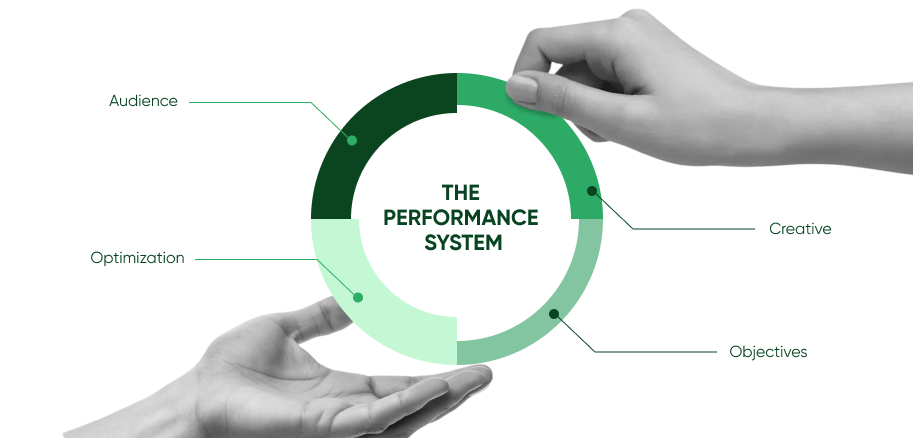
A high-ROI performance marketing campaign is the outcome of a structured system – shaped by clear objectives, informed targeting, and creative that earns attention within seconds. But for many teams, performance marketing ends up feeling fragmented.
There are channels to manage, creatives to produce, reports to interpret, and decisions to make with imperfect data. When everything operates in isolation, it naturally leads to inefficiencies and unpredictable outcomes. The issue is seldom capability. It’s the structure beneath it.
This article breaks down the essential components of a performance marketing campaign designed to increase revenue efficiently and sustainably. Each section includes practical examples, platform insights, and the latest behavioral data.
Our intention is not to simplify performance, but to make it understandable, strategic and repeatable. That is ultimately what drives strong, predictable ROI.
Every successful performance marketing strategy begins with a well-defined, measurable objective. It gives direction to the entire system: budget decisions, channel selection, creative formats, and optimization choices. Without this clarity, teams default to vanity metrics or misaligned targets.
Research from CoSchedule shows that marketers who implement SMART goals are 376 percent more likely to report success. In practice, vague objectives such as “increase awareness” offer little to optimize against. A goal like “generate 200 high-intent leads in Q2 at a target CPA of £35” gives the campaign a clear, measurable path and enables proper forecasting. It also allows media teams to assess whether the ROI expectations are realistic relative to audience size, market competition and platform behavior.
Clarity at this stage prevents wasted spend later. It creates alignment between performance and commercial outcomes, which is the foundation of ROI-driven marketing.
New to paid advertising? Check out wonderwork’s 5-minute paid ads guide.
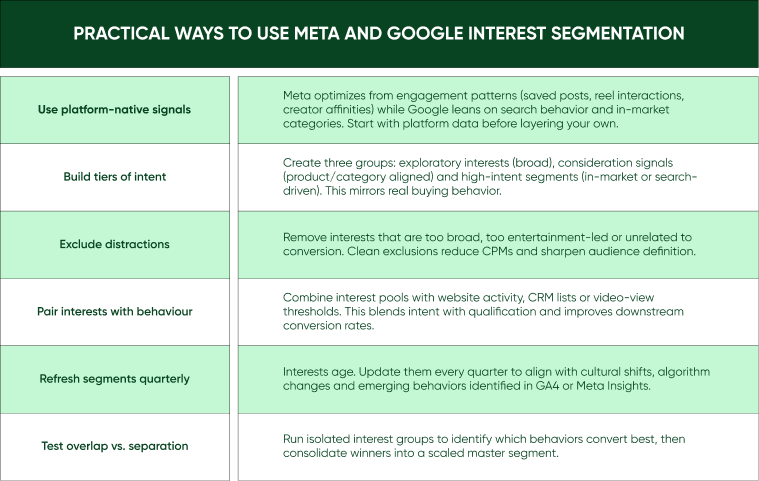
The most efficient way to improve campaign ROI is to refine who you target and why. Relevance is what lowers CAC, improves ROAS and drives conversion velocity. Platforms such as GA4, Meta Audience Insights and CRM analytics reveal behavioral patterns that connect directly to performance. Struggling with Google Ads? Read our blog on 6 reasons your Google Ads aren’t converting.
Audience segmentation has been shown to increase ROI by up to 760 percent (Campaign Monitor). This is largely driven by message relevance and accurate intent mapping at each stage of the funnel.
When campaigns move away from broad, generic audiences and toward defined psychological and behavioral cohorts, relevance increases and costs decline. Accurate targeting is not just about reach. It is what shapes the economics of performance.
Strong targeting cannot compensate for weak messaging.
In a performance marketing campaign, creative is responsible for capturing interest, communicating value and influencing behavior in a matter of seconds. Meta’s internal data shows that up to 56 percent of conversion outcomes can be attributed to creative quality alone.
High-performing ads by challenger brands typically include four components: a clear value proposition, visual consistency, a strong opening frame and a specific call to action. Good creative strategy is not expressive for the sake of expression. It is focused, direct and aligned with the audience’s intent. That is what improves conversions and keeps acquisition costs sustainable within a high ROI performance marketing campaign.
A profitable funnel is more than a collection of linearly distributed assets (TOFU-MOFU-BOFU). It is a structured behavioral journey. The marketing campaign structure should guide the user from awareness to action with minimal friction.
Here’s a quick look at a traditional funnel:
A Nielsen meta-analysis of consumer packaging goods campaigns found that full-funnel strategies see up to 45% higher ROI and 7% increases in offline sales compared to marketing campaigns across a single purchase stage.
Our internal performance insights show a similar pattern. Instagram reach increases significantly when top-of-funnel content is paired with retargeting sequences, and TikTok viewers respond strongly to credibility-based messages after initial engagement. Explore our case studies to learn how we implement high-ROI performance campaigns.
A strong funnel acts as a multiplier. It gives each message a defined role, which is essential for paid media optimization.
Tracking is the infrastructure of a performance marketing strategy. Without it, even the best creative and funnel cannot produce meaningful insight. Accurate measurement requires proper pixel installation, defined conversion events, platform integrations and UTM parameters that allow you to assess channel performance with confidence.
Poor tracking is one of the most common reasons brands misinterpret their results. Broken events or missing UTMs can distort reporting for weeks.
Before launching a campaign, every event should be tested manually. Analytics pipelines should be checked regularly to ensure platform attribution remains consistent. When tracking is clean, optimization becomes strategic rather than reactive. This is what enables stable, long-term ROI-driven marketing.
A successful campaign is never static. Continuous refinement is essential for maintaining ROI, especially as platforms evolve and audience behavior shifts. Meta’s data shows that advertisers who run structured A/B tests improve results by up to 30 percent over time.
In practice, this means reviewing key metrics such as CTR, CPA, ROAS and LTV weekly, not monthly. It involves testing new creative formats, adjusting budgets between high-performing and low-performing ad sets and introducing regular creative refreshes to counter fatigue.
Continuous optimization is what keeps performance systems efficient. It ensures that effort compounds over time, which is central to how a brand improves campaign ROI.
The best campaigns come from teams that understand both creative direction and data. This balanced approach is what defines a strong performance marketing agency. Creativity brings context, emotion and differentiation. Data brings accuracy, clarity and momentum.
Campaigns that rely on creative alone often fail to convert.
Campaigns that rely on data alone often fail to stand out.
Brands that merge the two outperform both groups.
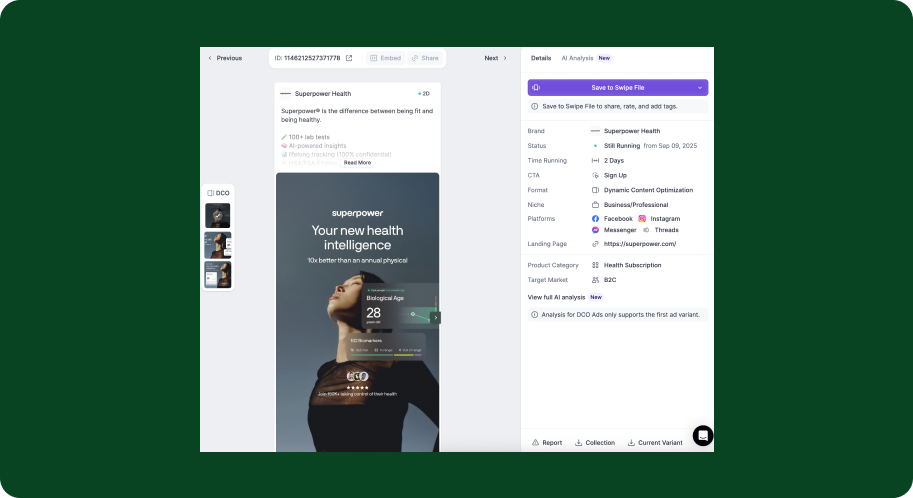
Quick tip: We use tools like foreplay.co to analyze competitor ads as well as predict winning and losing creatives – it’s an AI extension of our creative and data teams that combines many parts of the creative and data audit in one.
Ultimately, the objective is not to choose between creativity and performance. It is to build a system where each strengthens the other.

wonderwork builds performance systems that combine strategic clarity with creative discipline. We start by defining actionable objectives and developing segmented audience frameworks informed by behavioral data. From there, we engineer creative designs for conversion and test them within a structured, full-funnel setup.
Our reporting is transparent and our optimization cycles run daily. This approach consistently reduces acquisition costs while improving conversion velocity. In one recent campaign, restructuring the funnel and replacing underperforming creative reduced CAC by more than 90 percent in six weeks.
The future of performance belongs to brands that operate with clarity, creativity and consistency. Return on investment (ROI) is not an isolated number. It is a reflection of a system that has been built with intention and maintained with discipline. Performance campaigns should evolve continuously, keeping pace with the platforms and the people using them.
If you're ready to scale with structure, explore how our approach supports sustainable growth by requesting your free audit today.